
Wesleyan Way Awards honor our heritage and witness

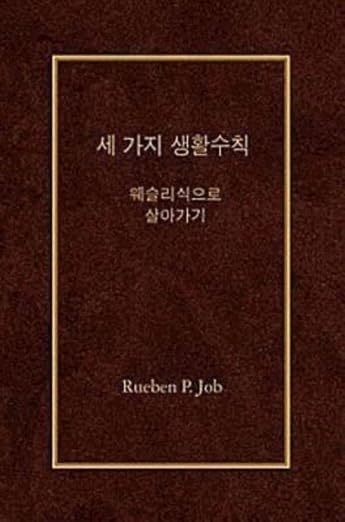
"Three Simple Rules" has been translated into several languages, including Korean.
In his inconspicuously small, yet enormously popular book, Three Simple Rules, Bishop Rueben P. Job, who grew up near Jamestown, North Dakota, penned in simple language the basis of a Methodist life, “A Wesleyan Way of Living.”
Bishop Job’s rules for Methodists are: “Do No Harm, Do Good, and Stay in Love with God by attending upon the ordinances, the spiritual disciplines, of God.” John Wesley, the founder of our United Methodist Church, responded to early Methodists who were trying to live their lives according to the example of Christ with these basic rules. Job simply made them clearer for us in today’s world.
In 2024, to honor this profound work by Bishop Job, the Dakotas Conference initiated the Wesleyan Way Awards to raise up one church and one person each year who exemplify Wesley’s guidance for living on a path to righteousness and holiness.
Wesleyan Way Church Award
This year, the church chosen for the Wesleyan Way Award is Iroquois Trinity United Methodist Church, in Iroquois, South Dakota.
Trinity UMC is the only church in this eastern South Dakota town of around 300 residents and fortunately sits near the local school. The congregation at Trinity UMC has an organic Wesleyan spirit that drives them to exemplify service to God and neighbor. Their pastor, Rev. Tia Felberg, said it this way.
“Iroquois is a unique group of people that they are always looking for ways to help, looking for ways for outreach, looking for new ideas. They just have enough people in enough different places where if there are needs, the church is quick to learn about them.”
Rev. Felberg also knows the value of a strong United Women in Faith group whose members recognize gifts and unabashedly invite others into shared ministry.
“Our United Women in Faith Group is really good at seeing the needs and getting the whole church involved. Like, ‘I noticed you're really good with kids. You know, would you want to lead this ministry at school?’”
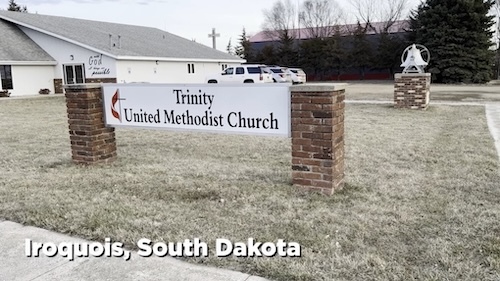
Iroquois Trinity UMC
The Iroquois Trinity UMC’s proximity to the school also fostered their symbiotic relationship, said Felberg.
“And that's the other thing: we have access to the school. If the school has a need, we are their first call, and we're honored, because we really want to help. So, it's just a lot of really good relationships, a lot of really good community connection, which is really important.”
In announcing the Wesleyan Way Award, Conference Superintendent Brandon Vetter described the Iroquois Trinity UMC programs, which are especially admirable, given that Iroquois barely has 300 residents.
“They say ‘yes’ to whatever need the school might have: collecting socks, underwear, mittens, hats, and adapting to change their monthly mission offering, should the school have need.
Their growth in all areas of the church can not only be attributed to this community engagement and this attitude to saying yes to whatever God brings.”
In closing, he continued, “They stay in love with God by living out their faith right where they are. They've embodied the Wesleyan way of living that warmly invites their community to join them to do no harm through passionate hospitality, do good through community engagement, and to stay in love with God through living out their faith in their everyday lives.”
See a video from 2024 about the Iroquois Trinity UMC's outreach.
Wesleyan Way Individual Award
Conference Superintendent Dan Bader presented the Wesleyan Way Individual Award.
Before announcing the recipient, he looked back to the rich history of our Methodist Movement. “From the earliest days of the Methodist movement to the mission and ministry mindset of circuit riders who criss-crossed the Dakotas to what is now truly a worldwide church that continually invites people to be followers of Jesus in the Wesleyan way, there are some who have a deep passion for learning about, leaning into, boldly claiming, and also reminding all of us of our rich history.”
As he announced Rev. Duane Coates as the recipient, he shared some additional insights. “For many years, Duane stood before this annual conference, …passionately reminding us of who we are, where we come from, and how we are to live as followers of Jesus in this beautiful, rich Wesleyan way as people who seek to do no harm, to do good, and to stay in love with God. Beyond that, like early circuit riders, Duane has been faithful to his calling as an itinerant pastor, literally criss-crossing the Dakotas conference, serving in both smaller rural areas and larger communities. He even shared a first-person monologue as John Wesley- it would've been better in costume ... at annual conference to help us get excited about who we are as followers of Jesus in this Wesleyan tradition.”
As Pastor Duane took the microphone, he humbly joked, “This would've been better in [a John Wesley] costume."
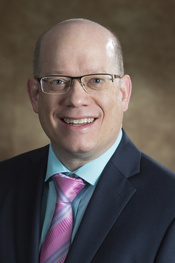
Rev. Duane Coates
He went into a more serious tone as he shared the struggle he witnessed almost 20 years ago, when it seemed the UMC wanted to minimize the importance of our history in the name of reforming the church. But as an avid student of UMC history, both worldwide and in the Dakotas, he said, “I was history before history was cool.”
Rev. Coates’ love of Wesleyan history began when he was just 14 years old, in the year of the Methodist movement’s bicentennial, in confirmation class.
“And the more I studied about Wesley, the more impressed I became– his theology of grace and how that all works. I've often described myself as a progressive pietist, somebody who is deeply in love with God, somebody who wants to stay in love with God, and practice all the ordinances of God.”
He said we often have a misunderstanding of history, and confuse history with nostalgia. He went on to clarify why the difference is so crucial to our church.
“Nostalgia comes from two Greek words. One, nostos, which means home or homecoming, and one, algos, which means pain. And the Germans have translated that to being homesickness. But what it feels like is, 'I don't like it here. This gives me pain. I want to go back to some other place.'"
“That's different from history. History says, ‘Let's remember who we are.’ Let’s remember, reform our covenant, and move forward. Move forward to who John Wesley was and who he wants us to be, instead of wanting to go back to the past and be homesick for where we used to be. Let's move forward into the world as our parish.”
At a meeting of the Commission on Archives and History of the UMC, Bishop John Scholl asked commissioners to imagine passing on our history to the next generation, to make our story relevant to younger people. Coates was a young pastor just observing the Commission meeting.
Rev. Coates said later, “From about then, and certainly once I started serving on the commission in 2016, I really saw the need to recapture our missionary zeal, especially in the Dakotas. You know, Methodist churches were among the first structures built, or at least the first organizations formed in pioneering towns. The circuit writers would push through as soon as the railroad came, and there had to be a reason why they established those churches. There had to be a reason why people came. There had to be, you know, some itch that the church was scratching. When it wasn't easy to come to church. You had to get there by horse and buggy, and the roads were not good.”
In closing, he added, “So, I think by studying our history, we can recapture some of our missionary zeal, reveal some of our DNA. What is it that makes us unique? What is it? Why is there a church here?”
If we can answer these questions and align ourselves daily with "Three Simple Rules" for following the Wesleyan Way as described by Bishop Job, we will truly find our hearts warmed with God’s grace, loved by our savior, Jesus Christ, and filled with the Holy Spirit, knowing that God is with us as we share and practice God’s love in the nearest and farthest corners of the earth.
Watch the Wesleyan Way award presentations from Annual Conference 2026.