
Equipped to Lead: Rev. Matt Morrison and the transformative impact of Practical Church Leadership

.jpg)
Rev. Matt Morrison is the new director of DWU's Practical Church Leadership program.
As a United Methodist pastor, discerning God’s call is a regular part of the journey of faith and ministry. It’s something that isn’t a solo endeavor but includes trusted family, friends, and colleagues, church leadership, the appointive cabinet, and district and conference boards of ministry. The Holy Spirit works through it all – and sometimes in unexpected ways.
After nine years of ministry at Asbury United Methodist Church in Sioux Falls, S.D., as the associate pastor, Rev. Matt Morrison knew this year’s appointment season would be a time of collaborative discernment as members of his church prepared for the retirement of their senior pastor. However, in that process, God opened a door that Matt had not predicted – an opportunity to serve as the director of the Practical Church Leadership (PCL) program at Dakota Wesleyan University—a program he credits with reshaping not only his ministry, but the trajectory of the church he serves.
“I really did sort of have that sense that I would always ask 'what if…' if I didn't apply,” recalled Morrison.
From Participant to Leader
The PCL program was developed at Dakota Wesleyan in 2018 in partnership with the Dakotas-Minnesota Area of the United Methodist Church. Dr. Alisha Vincent, a member of Asbury, has been leading the program since its inception. She recently accepted a position with the Dakotas and Minnesota Methodist Foundations as Vice President of Programs and Operations.
Morrison first encountered PCL after multiple invitations over the years. Timing had always been the barrier—seminary work, ordination requirements, and the steady demands of pastoral ministry. But in 2022, sensing a window of opportunity, he took the step.
“The timing wound up being absolutely perfect,” Morrison shared. “It helped me finish ordination, but more importantly, it set up so much of what came after.”
When he later learned that Dr. Vincent would be transitioning, he felt a growing sense of call. Encouraged by colleagues and affirmed by trusted voices, Morrison began to see the opportunity not just as a career move, but as a way to multiply impact.
“This feels like a natural move,” he said. “A way to take the tools I’ve picked up and help equip others to be more effective in ministry.”
Learning That Leads to Action
At its core, the PCL program is designed to bridge the gap between theological training and the day-to-day realities of leading a congregation. For Morrison, one of the most powerful aspects was the applied project—work that directly benefits the local church while building leadership capacity.
At Asbury, that project became the catalyst for a comprehensive strategic plan.
After an earlier visioning process had been paused during the COVID-19 pandemic, PCL gave Morrison and his leadership team both the structure and the permission to revisit the work. With coaching, tools, and accountability in place, they developed and adopted a strategic plan in 2023—one that continues to guide their ministry today.
The results were tangible.
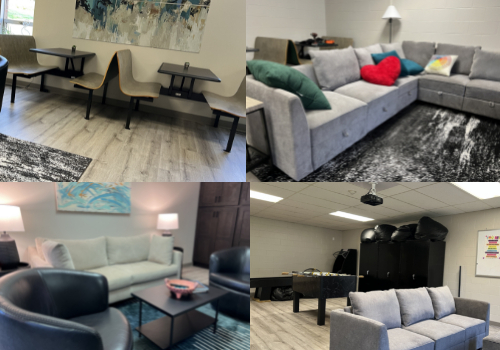
Four re-modeled rooms for youth ministry at Asbury.
One of the most significant outcomes was a renewed focus on becoming a truly multigenerational church. That commitment led to bold decisions: relocating youth ministry into a prominent, welcoming space and expanding staffing from a part-time role to a full-time Director of Youth and Next Generations.
The congregation responded with enthusiasm—raising approximately $40,000 in less than two weeks to support the vision.
And the impact? Measurable growth. What began with just a handful of students has grown into a vibrant and expanding youth ministry, now reaching dozens of young people.
“If I were to point to the biggest success story,” Morrison reflected, “it’s been in the area of youth ministry.”
Building Confidence and Capacity
Beyond the applied project, Morrison points to other key areas of growth—especially in financial leadership and strategic planning.
“I’m not a money guy,” he admitted. “But having courses on finance and stewardship gave me confidence I didn’t have before.”
This confidence has led to creative solutions and proactive conversations—helping ministry leaders think strategically about resources and sustainability.
Equally impactful were the tools for project management and long-term planning.
“There’s no way we could have done our strategic plan without what I learned in PCL,” he said. “It gave us a roadmap. Without it, we would have just been guessing.”
Why It Matters for the Mission
For some, programs like PCL may seem secondary to the “real work” of ministry—preaching, pastoral care, and spiritual formation. Morrison sees it differently.
Drawing on both scripture and experience, he emphasizes that effective ministry requires intentional structure and thoughtful leadership.
“How do we order the work of the church in ways that allow us to be more effective, that allow us to make better decisions, that allow us to help people step into areas of gifting in new ways, that help us create new systems that are healthy and sustainable so we’re not constantly wearing ourselves out trying to reinvent the thing that we just invented two years ago?” he reflected.
In that sense, PCL is not a distraction from the mission—it is a tool for fulfilling it.
By equipping pastors with skills in leadership, communication, governance, and strategy, the program strengthens the church’s ability to live our mission – to make disciples of Jesus Christ for the transformation of the world.
.jpg)
Pastors from across the country participate in PCL at Dakota Wesleyan.
An Investment That Pays Off
Time is often the biggest hesitation for pastors considering additional training. Morrison understands the concern—but offers a reframing.
“Nobody has time,” he said candidly. “But this is an investment.”
While the program requires commitment in the short term, he emphasizes that it ultimately saves time by equipping leaders with tools they can use again and again. It also creates space—and accountability—to tackle important work that often gets postponed.
“It gives you permission to lean into things you know you need to do,” he said. “And it gives your congregation a reason to rally behind that work.”
Looking Ahead
As Morrison steps into his new role as director, he is energized by both the strength of the existing program and the possibilities for its future.
“I believe in this program deeply,” he said. “I would recommend it to just about anyone, regardless of ministry tenure or what their previous experience has been.”
He also sees opportunities to expand its reach—bringing in new voices, exploring new ideas, and continuing to make it accessible through grants and partnerships.
“I think there are great opportunities to look at where the PCL program is now and try to imagine what the next iteration of it is,” shared Morrison.
He is also passionate about sharing the blessings of PCL beyond the denomination and encouraging people to “tell their friends.”
“This is not strictly a UMC thing,” explained Morrison. “It is a practical church leadership course, it's practical in any size congregation, in any denomination, in any part of the world.”
An Invitation to Consider
For pastors wondering if PCL might be right for them, Morrison offers a simple encouragement: explore it.
“Even if you feel strong in some areas, there’s always something to gain,” he said. “And for the areas that feel draining or outside your expertise, this can be a game changer.”
He welcomes conversations with those who are curious or unsure—an open invitation rooted in his own experience of transformation.
%20(4).jpg)
Because sometimes, the question “what if?” is the very thing God uses to lead us into deeper effectiveness, greater confidence, and a renewed capacity to serve.
And in a time when the church is called to be both faithful and adaptable, that kind of leadership matters more than ever.
The Practical Church Leadership program is a year-long, online certificate program designed to increase a pastor's capacity to be an effective church leader and improve skills in financial stewardship, human resource management, and development offered through Dakota Wesleyan University. Individuals who are interested in participating should apply by May 1. Contact Diane Owen or Matt Morrison for more information.