
New ideas for serving rural churches

“I love rural ministry,” said pastor Kim Hastings, serving a triad of churches near Watertown First UMC. “I wish that I could be more of a pastor to the Henry and Frankfort churches.”
Last month, in a trip funded by the Lilly Endowment, Pastor Kim attended the Rural Ideas Conference at the University of the Ozarks in Clarksville, Arkansas. She met with leaders from across the country who are developing innovative ideas for transforming rural ministry. The conference was organized by the Town Square Collaborative.
Most of our churches in the Dakotas Conference are rural churches. Even if you thought you were in a town, you're more than likely considered a rural church. Pastor Kim said, "Urban looks different in South Dakota than it does other places. So most of what we would consider 'urban' in South Dakota is technically still rural in other places in the world."
In a rural church setting, a pastor is often shared between several churches. In doing so, it’s often not possible to perform all the duties of a full-time pastor for each church. That calls for creative solutions to ministry. At this conference, some creative solutions and models were shared. The pastors attending came from a variety of protestant denominations.
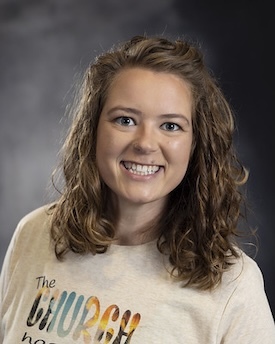
Pastor Kim Hastings
“It wasn't a United Methodist-specific conference,” shared Pastor Kim. “It was held at a Presbyterian college, and United Methodists attended, but there were also Presbyterians, Episcopalians, North American Baptists, and United Church of Christ pastors, too.”
Hastings said it was very interesting to see how other denominations within their own states, conferences, and districts are “leaning into rural places and building up leaders in those places. It's something that's happening. And so rather than being behind the eight-ball, what are we doing to get ahead of it?”
One of the conference’s speakers was United Methodist Rev. Dr. Allen Stanton, who is also a faculty member at Kairos University and is working with our Dakotas Conference to develop rural ministry models that work in our context. Stanton is the author of Reclaiming Rural: Building Thriving Rural Communities.
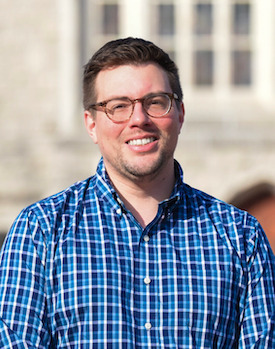
Rev. Allen Stanton
“I'm super excited to hear about how [cooperation with the Dakotas Conference] is going," said Pastor Kim. “What it is and what rolls out of it because I enjoyed conversation with him and a couple others.”
Pastor Kim enjoyed hearing how different denominations are living into rural models across the country.
“So right now there's not a whole lot of pastoral care being able to happen in some rural areas. So that was something I was really looking forward to at this Rural Ministries Conference: what are other rural places doing for pastoral care? Like, when I physically can't do more than what I'm doing right now.”
Ministry in the Wesleyan tradition is ministering to each other. Laity are a foundational building block of our denomination, giving us part of our “Methodist” moniker. Rural ministry includes efforts to re-engage laity to serve each other, even in teams.
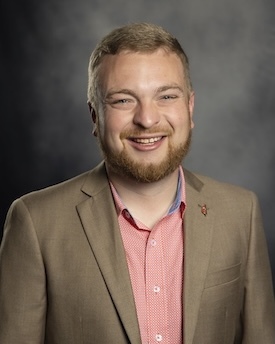
Rev. Bennett Clough, Faulkton UMC.
Commenting on the presentations at the conference, Hastings said, “There's a lot of teams that they have put together, where they've found people that were passionate, trained them, and then when they had a schedule figured out [for visitation ministry], they had a list of people they could also call on.”
Hastings is looking forward to the new ministry models the Conference is planning, and being a part of one or more of those models. Her appointment to Watertown First UMC and Clark UMC (and beyond) is something she is excited about.
Another one of our rural pastors who was unable to attend the conference is Rev. Bennett Clough, serving the Faulkton UMC. Clough has been in the Dakotas for just one year, and came here intentionally to serve in rural ministry. Earlier this year, Pastor Bennett was interviewed about his passion for rural ministry. You can hear his story in this video, produced by Anna Mutzenberger with Dakotas Conference Communications.