
Reflections on the Soil: Dakotas Cabinet shares insights from church conferences

Friends in Christ,

Bishop Lanette casts vision for mission and ministry at AC 2025.
Each fall, as we move through Church and Charge Conference season, I am reminded again of the sacred privilege of this connection. Our conference superintendents travel thousands of miles, sit at countless tables, worship in sanctuaries large and small, and listen deeply to the stories of faithful United Methodists across the Dakotas. They celebrate baptisms and confirmations, quiet acts of service and bold experiments in mission. They also hear the honest concerns, fatigue, grief, and questions that many of our churches and leaders carry in this season.
What follows is a Cabinet reflection shaped by those conversations. It is offered not as a judgment, but as a pastoral snapshot of our shared life - where we are experiencing fruit, where the soil is thin or crowded, and where God may be inviting us into deeper cultivation. The Cabinet has framed this reflection through Jesus’ Parable of the Soils (Luke 8:4–15), a story that reminds us that the work of ministry is always both holy and human. God is lavish with the seed; we are called to tend the soil with honesty, humility, and hope.
I want to be clear at the outset: this reflection is not about blame. It is about truth spoken in love. It names real challenges facing congregations and leaders in our time, while also affirming the deep faithfulness, resilience, and creativity that I see throughout our conference. Many of our churches find themselves in more than one “soil” at the same time - and that, too, is part of the human condition. Seasons change. Soil can be tended. New life is possible.
I invite you to receive this report prayerfully. Read it not as something being done to you, but as something we are discerning together. Use it as a tool for conversation, reflection, and shared imagination - asking not only “Where are we?” but also “What might God be growing here?” and “Who is God calling us to become for the sake of our communities and the world God so loves?”
As your bishop, I remain deeply grateful for your faithfulness and your love for the church and your communities. I am confident that, by God’s grace and through our shared labor, we can continue cultivating soil that bears fruit - sometimes thirty, sometimes sixty, sometimes a hundredfold - in ways we cannot yet fully see.
Grace and peace,

Bishop Lanette Plambeck
Jesus tells a parable of a farmer who scatters seed on four types of soil—a path, rocky ground, thorns, and good soil. Jesus tells his disciples that the seed is the Word of God and goes on to explain each of the soils. The different soils represent the varied conditions of human hearts and communities, shaping how the gospel takes root and bears fruit.
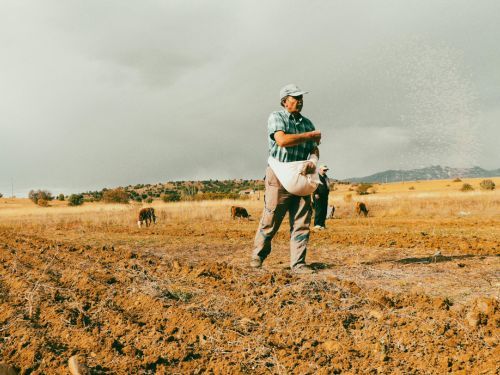
Assessing the "soil" for mission and ministry.
What is striking in this parable is that the farmer does not sow selectively – as we would expect for efficiency – but rather the farmer scatters generously, trusting that God will bring fruit even amid challenging conditions. The work is both divine and human: God gives the seeds and the growth, yet the soil must be cultivated and the plants nurtured.
This parable offers a powerful lens for evaluating the current health of our clergy, churches, and communities. Like the soils in Jesus’ story, our ministry landscape reflects a diversity of conditions—each with its own challenges, possibilities, and a call to faithful work.
Assessing the Health of the Soils in Our Conference
Across our conference, we see a diversity of health among churches, leaders, and communities. The call remains the same: make disciples of Jesus Christ for the transformation of the world, scatter the seed everywhere—even beyond Sunday morning worship and traditional ministry settings. We need to help our people move past a “build it, and they will come” mindset and instead work toward continuing to reclaim a ministry of going and serving, not simply inviting.
The following are some of our soil-by-soil reflections and learnings based on what we are seeing and hearing as we meet with churches and work with clergy and lay leadership.
The Path — Churches Near the End of their Life
Some congregations resemble the seed on the path: hardened by years, small in number, and facing the likelihood of closing within five years. Many have stepped out of active mission to their communities and exist as a worship/closed fellowship chapel simply because they lack the people, finances, attitude, missional drive or structure to continue. They are, in effect, aging out and often their communities are also shrinking around them. This reality raises these questions:
- How can we safeguard the well-being of clergy and mission-driven laity serving in these communities?
- How many congregations will close in the coming years, and how will this impact the United Methodist witness connectionally and in individual communities across the Dakotas?
- How many new ministries/what new ministries must we plant/launch/start to remain an active and vibrant witness for Christ across North and South Dakota?
The path is not a place of blame. It is a place of honest assessment and compassionate care, even as we look forward to where God may be calling us next.
The Rocky Soil — Lack of Depth and Discipleship
Like the shallowness of the rocky soil, many clergy and churches are experiencing a shallowness in discipleship. As a church, we have lived on a “build it, and folks would come” transactional mentality, counting how many instead of how deep, sharing numbers without sharing Jesus stories of transformation widely and boldly. We are now recognizing the deficiency in deeper faith development and learning, especially in Wesleyan discipleship, among our church attenders and leaders. This lack of discipleship – truly wanting to learn from and live like Jesus daily– leaks into all aspects of the church: leadership development, small group formation, stewardship, volunteering, discerning vision and mission, transforming communities, and planting/starting new ministries. Examples of how we see rocky soil in the Dakotas:
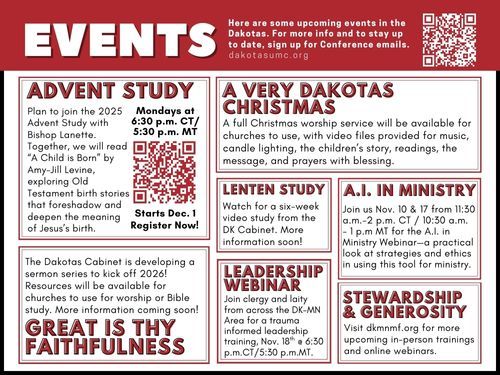
Opportunities for discipleship were shared at church conferences.
- A lack of commitment to lifelong learning or even a desire to lean into faith formation and deepening among many of our people.
- Good and faithful church leaders are wondering why things don’t work the same, yet are still not very willing to take risks or try new things or they feel stuck not even knowing what to try.
- Even our best and most committed leaders often aren’t interested in, or don’t make time for, their own faith growth and development.
Yet rocky soil is not hopeless. Rocks can be picked up and removed. But like anyone who has had the task of “picking rocks” in a field, we understand that it requires intentionality and “long obedience in the same direction.” Rock picking isn’t a solo endeavor, and it may take years to get the soil ready. However, with intentional discipleship and structured formation, rocky soil can become fertile ground. It can become ground suitable for deeper roots.
The Thorny Soil — Choked by Anxiety, Concerns, and Scarcity (perceived or real)
The weeds or thorns in our world that distract or choke us out are numerous. Some congregations are being overwhelmed and/or distracted from their mission and ministry by things like:
- Financial struggles
- Declining participation and lack of multiple generations within the congregation, stemming in part from the cultural pressure of family schedules being packed with kids’ activities every night and weekend, with no day of the week held as sacred for Sabbath rest.
- Internal pressure to keep things the same, even as those things are no longer working to make new disciples of Jesus
- Fear of change or fear that, if we do things differently, we will lose the people we do have
- Pastors who are so busy pacifying or caring for the gathered community that they don’t have time or energy left to dream or do the new thing.
Fear is the most significant thorn of all. And when fear is the driving force, Christ the King gets pushed to the margins.
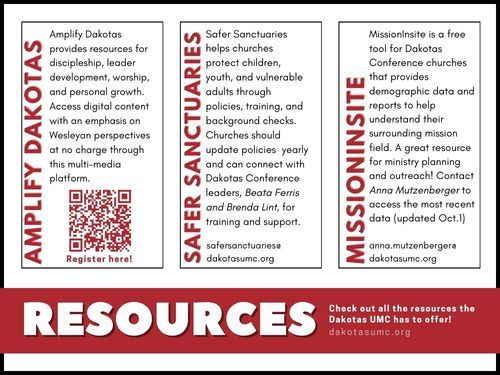
Conference resources to support churches and leaders.
But thorny soil can also become good soil. The weed killer for our thorns is multifaceted. It is spiritual formation, discipleship pathways, invitations to grow and serve, leaning into our Wesleyan heritage of social holiness alongside personal piety, and helping congregations re-center on identity, mission, and trust in God. It is also removing the barriers to hearing a call to ministry, acting on that call to ministry, and being resourced to pursue that call to ministry, whether that call is in your current place of work, starting a new job, connecting communities, starting a non-profit, serving in your local church, or moving into pastoral ministry. Leadership development helps us pull weeds. Discipleship pathways help us pull weeds. Well-being for our clergy and laity helps us pull weeds.
Of course, all thorny soil is not created equally. Some spots in the field are thick with weeds, and in other places, there’s hardly any weed in sight. Likewise, many of our churches have only a few weeds to deal with, and they are working to get those cared for so that the fruit-bearing plants will have room to grow. They are working to slowly remove the weeds, transform the soil into a place where people are thriving and growing. In other areas, it will require more time and collaborative effort. But with intentional effort, we can transform this soil too.
The Good Soil — Fruitful, Outward-Focused, Wesleyan at Their Core
On our journeys, we also encountered a great deal of good soil. We see it in churches and leaders who:
- Practice deep Wesleyan discipleship.
- Maintain healthy rhythms of work, rest, and play for clergy and laity alike.
- Exist for others, not themselves.
- Look beyond their walls—regardless of size.
- Hold together personal piety and social holiness.
These stories show that new life is springing up—in churches of all sizes and communities of all kinds:
- Fresh expressions and creative ways to engage the congregation and community in fellowship and discipleship
- Ministry to and with those who are incarcerated or battling addictions.
- New modes of team ministry and lay leadership that embrace new realities and multiply gifts.
- Addressing the hunger needs of the people in their communities
- Being a church for ALL the children of the community
- Equipping youth to be the leaders of the church NOW
These are signs of good soil being cultivated with creativity, courage, and love for neighbor.
Good soil requires devotion, cultivation, and ongoing care. The resources from our Lilly grants and from the generosity of United Methodists across the Dakotas offer a strong foundation for continuing to grow healthy, sustainable ministry across our conference.
A Shared Calling: All Soils Require Labor and Partnership
No person – pastor, lay leader, conference staff member – can cultivate healthy soil alone. This work is not a solo endeavor. The future requires all hands on deck—clergy, laity, conference leadership, and community partners working together. Coming alongside each type of soil requires discernment, endurance, and the courage to scatter seeds even when the outcome is uncertain.
.jpg)
Our shared vision as United Methodists
As connectional leaders, we will continue working directly with congregations to increase vitality in worship, discipleship, evangelism, and stewardship, and to strengthen systems that help churches mature toward a mission and vision beyond survival. We are committed to the well-being of our clergy and laity, to encouraging sustainable patterns for a lifetime of ministry and mission, and to providing resources that help leaders and churches thrive. We will tend to the soil of our own hearts and lives so we can come alongside our Dakotas United Methodists in brave experimentation and innovation.
The Parable of the Soils reminds us that God is generous with the seed—and we must be faithful with the soil. Our conference is a landscape of challenges and hope, closures and new beginnings, fears and deep faith. Through Wesleyan discipleship, shared leadership, spiritual formation, and courageous innovation, we can cultivate good soil across the Dakotas for generations to come.